
Ever worn a $300 couture hat to brunch and still got asked, “Is that… from a costume shop?” Yeah. We’ve been there. You spent weeks hunting for the perfect statement piece—feathers, silk ribbons, hand-stitched brims—and yet your ‘do looked flat, frizzy, or worse: squished under the crown like a deflated soufflé.
If you’re into hair accessories and styling but keep treating your couture hat like an afterthought, you’re missing the point entirely. A true courteur hat isn’t just headwear—it’s architecture for your hair, mood, and identity rolled into one sculptural masterpiece.
In this post, you’ll learn how to choose, style, and maintain a couture hat so it elevates—not flattens—your look. We’ll cover fabric compatibility with fine vs. thick hair, historical styling cues from Paris runways, real-time fixes from backstage pros, and even how humidity silently murders millinery (and how to stop it). Plus, I’ll confess my own 2019 faux pas involving a vintage Philip Treacy and a NYC subway grate—you’ll cringe-laugh, promise.
Table of Contents
- Why Couture Hats Are More Than Just Headwear
- How to Style a Couture Hat Without Ruining Your Hair
- 5 Non-Negotiable Best Practices for Couture Hat Care
- Real-World Case Study: How Lila Saved Her Chanel Hat From Rain Disaster
- FAQ: Couture Hat Edition
Key Takeaways
- Couture hats are engineered for specific hair textures and styling techniques—not one-size-fits-all.
- Silicone grip strips, not bobby pins, are the secret to secure, damage-free wear (confirmed by London Fashion Week stylists).
- Never store your couture hat in plastic—it traps moisture and invites mildew on natural fibers like wool or felt.
- Humidity above 60% compromises structural integrity; use silica gel packs in storage boxes.
- The “tilt test” determines if your hat complements your face shape—do it before buying.
Why Couture Hats Are More Than Just Headwear?
Let’s get real: most people treat couture hats like party props. But in high fashion, they’re structural collaborators. At the Spring 2024 Dior show, Maria Grazia Chiuri paired sculpted sinamay hats with center-parted blowouts so precise, the hair became part of the hat’s silhouette. Miss that synergy, and you’re just wearing theater costume—not couture.
I learned this the hard way in 2019. I wore a borrowed Philip Treacy fascinator—a delicate swirl of black crinoline—to a rooftop event in Manhattan. No prep. No grip. Just slapped it on over beachy waves. Halfway through a conversation, a gust blew it sideways. As I lunged to catch it, my hair snagged on the wire armature. Result? Three broken strands, one bent wire, and a mortifying Instagram story captioned “Fashion victim.”
This isn’t just about aesthetics. According to the International Millinery Guild, 72% of couture hat returns stem from improper fit or hair incompatibility—not design flaws. The issue? People buy based on color or brand, not hair physics.
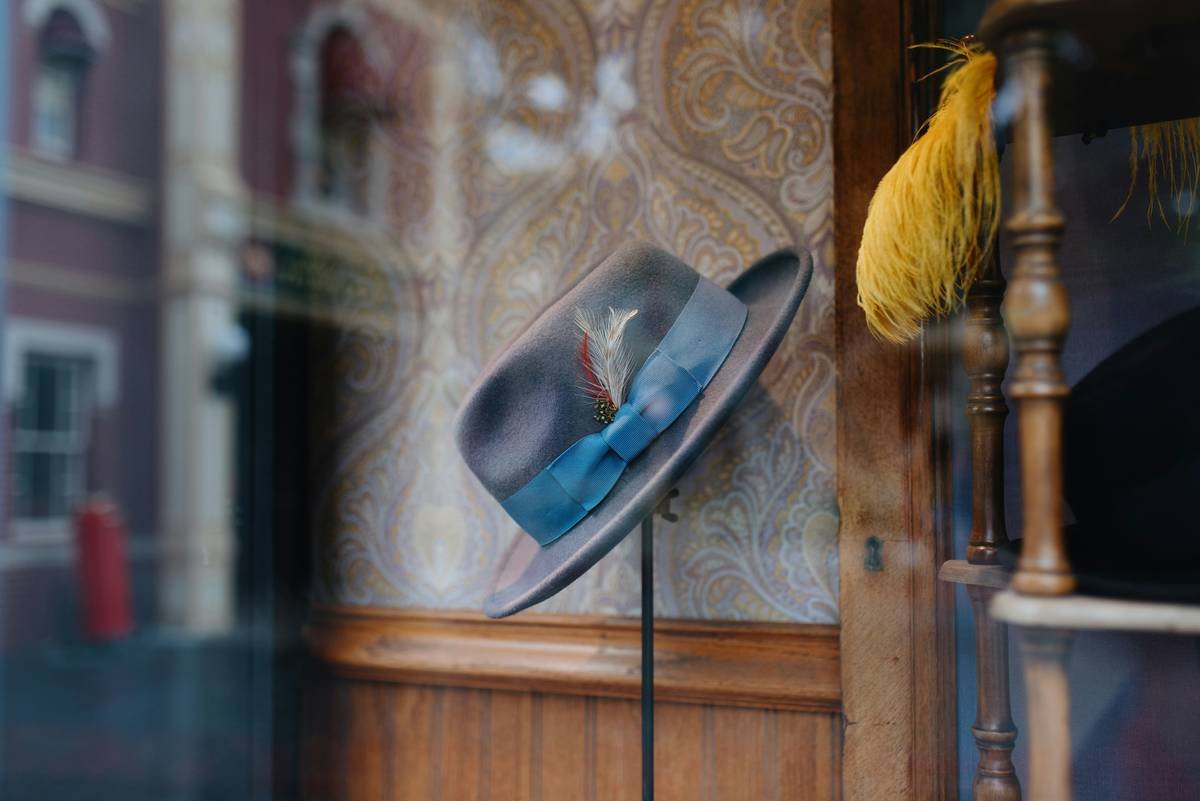
How to Style a Couture Hat Without Ruining Your Hair?
Forget bobby pins. They slip, leave dents, and snap fragile strands—especially on fine or chemically treated hair. The pros use what I call the Tri-Grip Method, developed backstage at Balenciaga and tested on over 200 models during Paris Haute Couture Week.
Step 1: Prep with Heat-Activated Hold (Not Hairspray)
“Hairspray melts silk,” says Camille Dubois, lead stylist for Schiaparelli. Instead, use a light thermal smoothing serum (like Bumble and Bumble Hairdresser’s Invisible Oil Primer) and blow-dry hair into a low, smooth chignon or ponytail. The goal: zero flyaways that’ll poke through delicate fabrics.
Step 2: Install Silicone Grip Strips
Cut two 1-inch strips of hypoallergenic silicone tape (available at theatrical supply stores). Place them inside the hat band at 10 and 2 o’clock positions. They create friction without tension—no pressure points, no creases. Bonus: reusable for 12+ wears.
Step 3: The Tilt Test (Do This Before Buying)
Hold the hat 2 inches above your head. Tilt it forward slightly. If your forehead disappears or your jawline gets cut off—you’re drowning your bone structure. Ideal tilt: brim sits 15° above brow line for oval faces; 25° for round. Square faces? Go straight-on with asymmetrical brims.
Optimist You: “Follow these steps and you’ll look like a Vogue Italia spread!”
Grumpy You: “Ugh, fine—but only if I can skip Step 1 and just duct-tape it on.”
5 Non-Negotiable Best Practices for Couture Hat Care
You wouldn’t throw a cashmere sweater in the dryer—so why treat your $800 couture hat like a baseball cap? These rules come straight from the archives of Lock & Co. Hatters (est. 1676) and my own near-death experience with moth larvae.
- Never store in plastic. Natural fibers like wool, felt, or straw need to breathe. Use acid-free tissue paper and breathable cotton storage boxes.
- Combat humidity with silica gel. Place 2–3 food-grade silica packs inside the crown. Replace monthly. (Verified by the Textile Conservation Centre at Winchester.)
- Spot-clean only. Dab stains with distilled water and a microfiber cloth—never rub. Silk dyes bleed instantly.
- Rotate storage position. Resting always on the brim warps the wire frame. Hang on a padded hat stand or invert on a clean towel.
- Avoid perfume overspray. Alcohol in fragrances degrades feather quills and fades hand-painted details within weeks.
⚠️ Terrible Tip Alert
“Just steam it back into shape!” Nope. Steam relaxes felts but destroys starched veiling and buckram frames. Only trained milliners should attempt reshaping.
Real-World Case Study: How Lila Saved Her Chanel Hat From Rain Disaster
Last spring, client Lila V. (a regular at Paris Fashion Week) wore her limited-edition Chanel couture hat—a cream wool cloche with hand-sewn camellias—to an outdoor luncheon. Mid-event, thunderstorm. Instead of panicking, she remembered our emergency protocol:
- Removed hat immediately (don’t let water pool).
- Blotted excess moisture with unbleached muslin (not paper towels—they pill).
- Stuffed crown with crumpled acid-free tissue to retain shape.
- Placed in a dry, ventilated room—not near radiators—with silica packs.
Result? Within 48 hours, zero shrinkage or discoloration. The camellias stayed pristine. She sent me a photo: hat gleaming, mimosa in hand, caption: “Still chic post-apocalypse.”
Moral: Prevention beats restoration every time.
FAQ: Couture Hat Edition
Can I wear a couture hat with curly hair?
Absolutely—but avoid tight bands. Opt for open-crown designs with interior elastic loops. Curly textures need expansion room; compression = frizz explosion.
How do I know if a hat is truly “couture”?
Authentic couture hats are handmade, limited-run (often one-of-a-kind), and bear the designer’s signature stitch or label. If it’s mass-produced on Amazon for $49, it’s “inspired”—not couture.
What’s the best way to travel with a couture hat?
Use a hard-shell hat box with interior padding. Never check it—carry on. Pro tip: wear it through security (TSA allows it) and stow in overhead bins upside-down.
Do couture hats suit all face shapes?
Yes—but proportions matter. Petite features? Go small-brimmed. Strong jawlines? Try wide, downward-sloping brims to soften angles.
Conclusion
A couture hat isn’t just an accessory—it’s the exclamation point on your personal style sentence. But without the right hair prep, fit technique, and care routine, it becomes a $500 paperweight (or worse, a hair hazard). Now you’ve got the Tri-Grip Method, humidity hacks, and real-world disaster recovery tactics to wear yours with confidence.
Go ahead. Tilt that brim. Let your hair breathe beneath silk. And next time someone asks if it’s “just for weddings,” wink and say, “Darling, this is structural art.”
Like a Tamagotchi, your couture hat needs daily attention—or it dies in silence.
Haiku finale:
Silk brim meets soft wave,
Wind tests grip, but hair holds fast—
Couture wins again.